
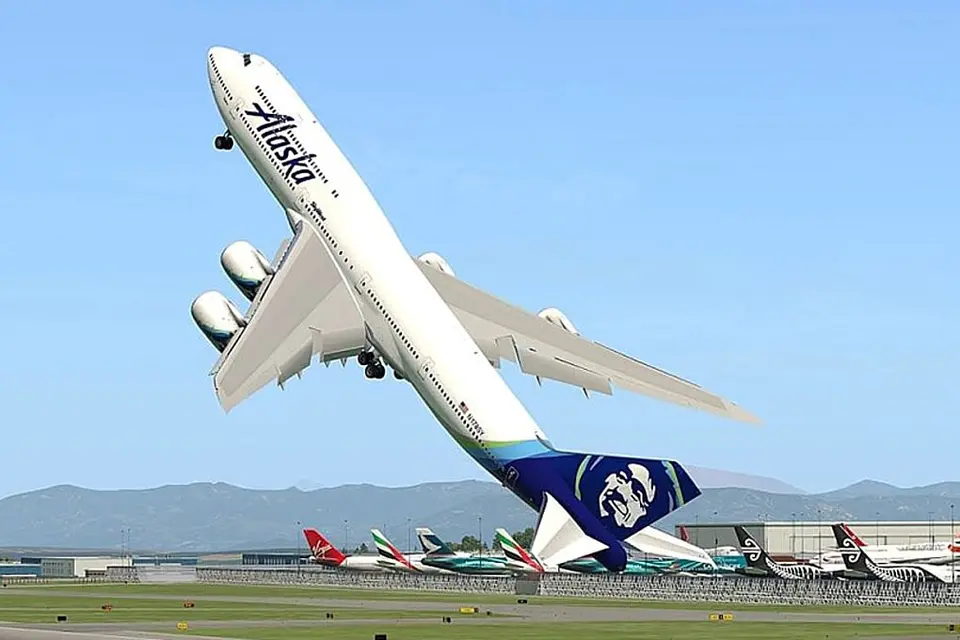
Takeoff is one of the most carefully planned moments of any flight.
From the outside, it can look almost effortless. A huge aircraft accelerates down the runway, its nose rises, the wheels leave the ground, and within seconds the airplane is climbing into the sky.
But behind that seemingly simple movement is a precise sequence of calculations, procedures, and decisions.
The dramatic image above captures the kind of moment that makes people stop and wonder: What happens when an aircraft doesn’t take off the way it is supposed to?
Takeoff Isn’t Just About Going Fast
For a commercial aircraft, reaching the end of the runway isn’t the goal.
The airplane needs to reach specific performance conditions that allow it to safely rotate, lift off, and continue climbing.
Pilots and flight crews consider several factors before departure, including:
- Aircraft weight
- Fuel load
- Runway length
- Wind direction and speed
- Outside temperature
- Airport elevation
- Runway condition
- Aircraft performance
- Obstacles near the airport
These factors can affect how quickly an aircraft accelerates and how much runway it needs.
That’s why pilots don’t simply push the throttles forward and “see what happens.”
The Moment the Nose Rises
One of the most recognizable moments during takeoff is called rotation.
As the aircraft reaches its calculated rotation speed, the pilots gently raise the nose using the flight controls.
The wings then generate enough lift for the aircraft to leave the runway.
From a passenger’s perspective, this can feel like the airplane suddenly tilts backward.
That sensation is completely normal.
But the amount and timing of rotation matter.
An excessive or poorly controlled pitch can create serious problems because the aircraft must maintain an appropriate attitude while continuing to accelerate and climb.
What If the Aircraft Rotates Too Early?
An aircraft rotating before the appropriate point can be dangerous.
The airplane may not yet have enough speed to achieve the expected climb performance.
There is also a risk of the aircraft’s tail coming dangerously close to the runway.
This is why pilots follow carefully calculated takeoff speeds rather than simply choosing a moment based on appearance.
Modern commercial aircraft are designed with substantial safety margins, and crews train extensively for abnormal situations.
What If the Aircraft Doesn’t Lift Off?
This is where another important procedure comes into play.
During the takeoff roll, pilots continuously monitor the aircraft’s speed and performance.
At certain points, there is still enough runway available to stop safely if a serious problem occurs.
But after the aircraft passes a specific calculated speed known as V1, the situation changes.
V1 is commonly described as the takeoff decision speed.
Beyond that point, stopping may no longer be the safest option, depending on the circumstances.
Instead, the crew may continue the takeoff and deal with the problem in the air.
Why Pilots Train for Takeoff Emergencies
Aviation safety depends heavily on preparation.
Pilots don’t simply train for normal flights. They practice abnormal and emergency situations in flight simulators.
These scenarios can include:
- Engine failures
- Rejected takeoffs
- Instrument problems
- Loss of important systems
- Tire failures
- Unexpected warnings
- Adverse weather
- Bird strikes
The goal is to make the correct response familiar before an actual emergency occurs.
That’s particularly important during takeoff because events can develop very quickly.
A Strange Angle Doesn’t Always Mean a Crash
Images of aircraft can sometimes be misleading.
A photograph taken at exactly the right moment can make an airplane appear dramatically steep, unusually close to the ground, or even out of control.
The camera angle can change how we perceive the aircraft’s attitude.
A plane climbing after takeoff can look much more dramatic when photographed from the side or below.
That’s one reason a single photograph doesn’t necessarily tell the entire story of an aviation incident.
To understand what actually happened, investigators would normally examine flight data, cockpit recordings, maintenance records, weather conditions, runway information, and eyewitness accounts.
The Aircraft Is Built to Handle More Than Passengers Realize
Commercial aircraft are engineered with significant structural and performance requirements.
The wings aren’t simply decorative surfaces that keep the airplane in the air. They are highly engineered structures designed to generate lift while handling substantial aerodynamic loads.
The landing gear, engines, control surfaces, and fuselage are also designed around demanding operating conditions.
That doesn’t mean aircraft are immune to accidents.
It means that unusual movements during a flight don’t automatically indicate that the airplane is about to fail.
Pilots have procedures for many situations that passengers might find frightening.
Why Takeoff Is So Carefully Controlled
Takeoff combines several demanding tasks at once.
The aircraft is accelerating rapidly while the pilots monitor:
- Airspeed
- Engine performance
- Aircraft attitude
- Flight controls
- Runway position
- Warning systems
- Communications
- Outside conditions
At the same time, the aircraft is transitioning from ground operation to flight.
That’s why takeoff and landing receive so much attention in pilot training.
What Passengers Should Do During an Unusual Takeoff
If you’re ever on an aircraft and something feels unusual during departure, the most useful thing you can do is remain seated and follow the crew’s instructions.
Passengers should:
- Keep their seat belt fastened
- Listen for crew announcements
- Follow evacuation instructions if given
- Avoid blocking aisles
- Leave luggage behind during an emergency evacuation
- Stay calm and pay attention
The flight crew has access to information passengers don’t have, including aircraft systems, speed, altitude, weather, and communications with air traffic control.
The Incredible Part About Modern Aviation
Perhaps the most interesting thing about a dramatic takeoff isn’t how frightening it looks.
It’s how much has to go right for a commercial airplane to leave the runway safely.
Before passengers even board, crews and ground personnel have already considered aircraft weight, fuel, weather, runway conditions, performance calculations, and operational requirements.
Then, during takeoff, the pilots continuously evaluate whether the aircraft is behaving as expected.
What looks like a few seconds of acceleration to a passenger represents years of training, engineering, planning, and carefully developed procedures.
Final Thoughts
A dramatic aircraft photograph can make a routine part of aviation look terrifying.
But takeoff is not an improvised maneuver. It is a carefully calculated process designed around specific aircraft performance, runway conditions, weather, and operating procedures.
When something doesn’t go according to plan, pilots have established procedures for deciding whether to continue, reject the takeoff, or manage an abnormal situation after becoming airborne.
So the next time you see a photograph of an aircraft climbing at what looks like an impossible angle, remember that one picture rarely tells the entire aviation story.
The real story is usually found in what happened before the photograph was taken—and what the pilots and aircraft did in the seconds afterward.