Think of online games as nothing more than a way to pass the time?
Some games can do a little more than keep you entertained.
Puzzle and strategy games often require you to remember information, recognize patterns, plan ahead, solve problems, or make decisions under pressure. They aren’t a replacement for exercise, sleep, or deliberate learning, but they can make a short break more mentally engaging.
Best of all, many can be played for free in a web browser.
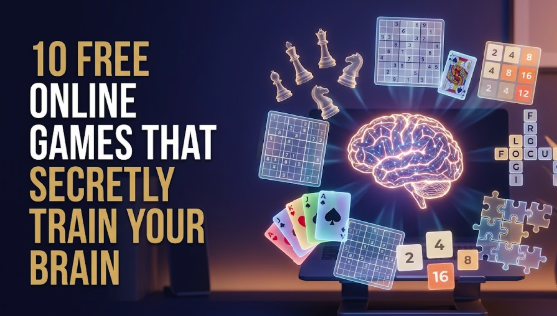
Here are 10 types of games worth trying.
1. Classic Solitaire
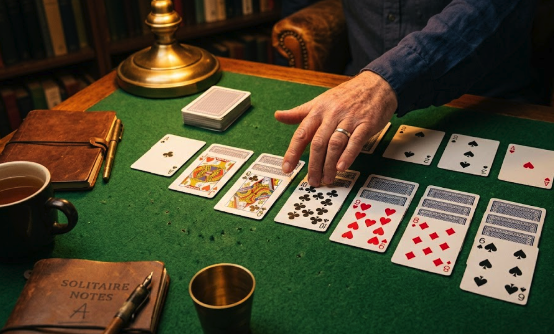
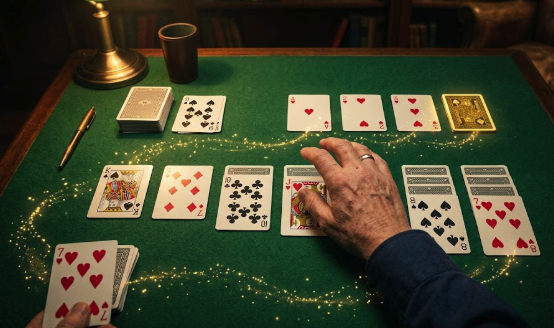
Solitaire looks simple, but a good game requires plenty of decision-making.
You have to consider which cards to move, which hidden cards to reveal, and when to send cards to the foundation.
The challenge is often less about finding a legal move and more about deciding which legal move creates the most useful options.
Brain workout: Planning, sequencing, and decision-making.
2. Sudoku
Sudoku is a classic number-placement puzzle that doesn’t require advanced mathematics.
You simply need to determine which numbers can logically fit into each space while respecting the rules of the grid.
As the puzzle becomes more difficult, you have to keep track of possibilities and eliminate incorrect options.
Brain workout: Logical reasoning and pattern recognition.
3. Crossword Puzzles
Crosswords combine vocabulary, memory, spelling, and deduction.
Even when you don’t immediately know an answer, surrounding clues can provide letters that help you work it out.
That makes the game a constant process of connecting information.
Brain workout: Vocabulary, recall, and verbal reasoning.
4. Word Search
Word-search puzzles are easy to start and surprisingly absorbing.
You scan a grid looking for hidden words that may appear horizontally, vertically, diagonally, or sometimes backward.
The challenge is largely visual—you have to quickly identify familiar patterns among a large amount of information.
Brain workout: Visual scanning and pattern recognition.
5. Mahjong-Style Matching Games
Matching games based on Mahjong-style tiles require you to identify pairs while keeping track of which tiles remain accessible.
A tempting match isn’t always the best match.
Removing one pair can uncover new tiles—or leave useful ones blocked.
Brain workout: Visual memory, planning, and spatial awareness.
6. Minesweeper
Minesweeper turns a grid of hidden squares into a logic puzzle.
Numbers tell you how many mines are located in neighboring spaces, and you use that information to determine which squares are safe.
The game rewards careful reasoning rather than simply clicking quickly.
Brain workout: Deduction, probability awareness, and logical thinking.
7. 2048
The goal of 2048 is straightforward: combine matching numbered tiles until you create a tile with a value of 2048.
The difficult part is keeping the board organized.
Every move changes multiple tiles, so a decision that looks good now can create problems several moves later.
Brain workout: Planning, spatial reasoning, and decision-making.
8. Jigsaw Puzzles
Digital jigsaw puzzles provide a simple visual challenge.
You have to recognize shapes, colors, patterns, and relationships between pieces while gradually constructing the complete image.
Larger puzzles can require considerable attention and persistence.
Brain workout: Visual-spatial reasoning and concentration.
9. Memory Matching Games
These games ask you to remember where matching cards or symbols are located.
As the number of cards increases, remembering previous positions becomes increasingly important.
A short session can turn into a surprisingly demanding memory challenge.
Brain workout: Short-term memory and concentration.
10. Chess
Chess is one of the most strategic games you can play online for free.
Every move changes the position, and strong play requires you to think about potential responses rather than focusing only on your own plans.
Even beginner games can involve planning, pattern recognition, and evaluating different possibilities.
Brain workout: Strategic planning, memory, and problem-solving.
Why These Games Feel Like a Mental Workout
The common thread isn’t that these games magically make you smarter.
It’s that they require active participation.
You’re not simply watching something happen. You’re making choices, remembering information, identifying patterns, and solving problems.
That can make gaming a more mentally engaging way to spend a short break.
However, research on whether playing particular games produces broad, lasting improvements in general cognitive ability is mixed. A game can exercise skills used within that game without necessarily producing large improvements across every area of thinking.
How to Get More From a Short Gaming Session
You don’t need to play for hours.
Try choosing a game that challenges you without becoming frustrating.
You can also increase the difficulty gradually:
- Try a harder Sudoku.
- Increase the size of a puzzle.
- Play chess against a stronger opponent.
- Attempt a more difficult Minesweeper board.
- Set yourself a goal in 2048.
- Complete a larger jigsaw.
The goal is to stay engaged rather than simply clicking through the easiest possible levels.
The Bottom Line
Online games aren’t a substitute for healthy habits, but they can turn a few spare minutes into an opportunity for active problem-solving.
Whether you’re arranging cards in Solitaire, spotting patterns in Sudoku, remembering positions in a matching game, or planning several moves ahead in chess, the right game can give your attention something interesting to work on.
And unlike a traditional workout, you can start with nothing more than a browser and a few minutes of free time.