A stain doesn’t always mean you need an expensive specialty cleaner.
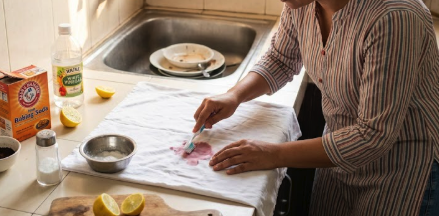
Before running to the store, check your kitchen. You may already have several simple household ingredients that can help deal with common stains on clothing, carpets, countertops, and other surfaces.
The key is knowing what you’re dealing with. Grease, coffee, tomato sauce, ink, and protein-based stains can all respond differently to cleaning methods.
And remember: the sooner you treat a stain, the better your chances of removing it.
Before trying any method, check the item’s care label, test the solution on a hidden area, and avoid heat until you’re sure the stain is gone.
1. Grease and Oil: Try Dish Soap
One of the simplest kitchen solutions for greasy stains is ordinary dishwashing liquid.
Dish soap is designed to break down grease, which makes it useful for oily food stains on washable fabrics.
How to use it:
- Blot away excess oil with a paper towel.
- Apply a small amount of dish soap directly to the stain.
- Gently work it into the fabric.
- Let it sit for several minutes.
- Rinse with cool or warm water as appropriate for the fabric.
- Wash normally.
Check the stain before putting the item in the dryer. Heat can make some remaining stains much harder to remove.
2. Coffee: Use Cold Water First
Spilled coffee on a shirt doesn’t necessarily mean the shirt is ruined.
Start by flushing the stain from the back of the fabric with cool water.
For a washable garment, apply a small amount of liquid laundry detergent or mild dish soap and gently work it into the stain.
Rinse and wash according to the garment’s care instructions.
Avoid immediately scrubbing aggressively. Hard rubbing can spread the stain or damage delicate fibers.
3. Tomato Sauce: Don’t Add Heat
Tomato sauce stains can be frustrating because they contain pigments as well as oils.
First, remove excess sauce with a spoon or dull edge. Don’t rub it deeper into the fabric.
Rinse the stain from the back with cool water.
Then apply liquid laundry detergent or a small amount of dish soap and gently work it into the affected area.
Wash normally after checking the fabric’s care instructions.
Important: Don’t put the garment in the dryer until you’ve confirmed the stain is gone.
4. Red Wine: Blot, Don’t Scrub
When red wine spills, your first instinct may be to start scrubbing.
Don’t.
Use a clean cloth or paper towel to blot as much liquid as possible.
For washable fabrics, rinse with cool water and apply liquid laundry detergent before washing according to the care label.
Some people recommend pouring salt, baking soda, or other kitchen ingredients onto wine stains, but these aren’t universal solutions and can sometimes complicate cleanup.
The most important step is removing excess liquid quickly.
5. Fruit Stains: Cool Water Can Help
Berry and fruit stains can leave strong colors behind.
Start by removing any solid pieces without rubbing.
Then rinse the fabric with cool water from the back of the stain.
Apply liquid laundry detergent and gently work it into the area before washing.
For washable white fabrics, a suitable oxygen-based laundry product may help with persistent discoloration, but follow the product directions and fabric-care instructions.
6. Chocolate: Remove the Excess First
Chocolate can combine oils, sugars, and pigments, making it easier to spread if you immediately rub it.
Instead, let any soft chocolate cool or harden slightly and carefully scrape away the excess.
Then rinse the fabric with cool water.
Apply a small amount of liquid laundry detergent or dish soap and gently work it into the stain.
Wash according to the garment’s instructions.
7. Sweat Stains: Use Detergent Before Washing
Yellowish marks around collars and underarms are often caused by a combination of sweat, body oils, and product residue.
Before washing, apply liquid laundry detergent directly to the affected area.
Gently work the detergent into the fabric and allow it to sit briefly before washing.
For persistent stains, a commercial laundry stain remover may be more appropriate than experimenting with multiple kitchen ingredients.
And don’t assume that stronger always means better. Harsh mixtures can damage fabric.
8. Ink: Be Careful With Rubbing Alcohol
Ink stains can be particularly difficult.
Rubbing alcohol is sometimes used to help loosen certain ink stains, but it should be treated as a cleaning chemical rather than a casual kitchen hack.
If you have it available, test it on an inconspicuous part of the fabric first.
Place a clean absorbent cloth underneath the stained area and gently dab rather than aggressively rubbing.
Because fabrics and inks vary significantly, check the garment-care instructions before proceeding.
For delicate or valuable clothing, professional cleaning is safer.
9. Water Rings on Wooden Furniture: Don’t Experiment
White or cloudy marks on wood furniture are often associated with moisture trapped in the finish.
You may find online advice recommending mayonnaise, toothpaste, baking soda, or other household products.
Be careful.
Different finishes react differently, and abrasive ingredients can damage the surface.
For valuable furniture, start with the manufacturer’s care instructions or consult a furniture professional.
For inexpensive finished furniture, a product specifically designed for the surface is generally a safer choice than trying random kitchen remedies.
10. Greasy Kitchen Surfaces: Dish Soap Again
Sometimes the simplest solution really is the best one.
For washable, sealed kitchen surfaces covered with cooking grease, diluted dish soap and warm water can often handle everyday buildup.
Apply the solution with a suitable cloth, wipe the surface, and rinse or wipe again as needed.
Always follow the manufacturer’s instructions for countertops and appliances.
Some materials, including certain natural stones and specialty finishes, require specific cleaners.
The Golden Rules of Stain Removal
Regardless of what caused the stain, a few principles apply to almost everything.
1. Act Quickly
Fresh stains are generally easier to deal with than old, dried stains.
2. Blot Instead of Scrubbing
Especially with liquids, blotting can remove material without spreading it.
3. Work From the Outside In
When treating a stain on fabric, working toward the center can help prevent it from spreading.
4. Don’t Automatically Use Hot Water
Heat can set some stains, particularly protein-based stains.
When in doubt, start with cool water and check the fabric-care instructions.
5. Never Mix Cleaning Chemicals
This is particularly important with bleach and other cleaners. Dangerous gases can form when incompatible chemicals are combined.
Kitchen ingredients aren’t automatically harmless either.
6. Test First
Apply your cleaning solution to a hidden area before treating a visible surface.
A stain is frustrating. A bleached-out patch or damaged finish can be even worse.
When a Kitchen Hack Isn’t Enough
Some stains simply require specialized treatment.
Consider professional cleaning when you’re dealing with:
- Expensive clothing
- Silk, wool, or other delicate fabrics
- Antique furniture
- Leather
- Large carpet stains
- Permanent marker
- Unknown chemical stains
- Stains that have already been treated with several products
The cheapest solution isn’t always the one that costs the least.
If a $10 cleaning product can safely protect a $200 garment, experimenting with random household ingredients may not be worth the risk.
Final Thoughts
Your kitchen already contains several useful cleaning tools.
Dish soap can tackle grease. Cool water can help with many fresh spills. Laundry detergent can handle everyday fabric stains. And simple habits—like blotting quickly and avoiding unnecessary heat—can make stain removal much easier.
The biggest trick isn’t having a secret ingredient.
It’s treating the stain correctly before it has time to set.
So the next time something spills, don’t panic and don’t immediately reach for an expensive cleaner. Take a moment to identify the stain, check the surface or fabric instructions, and start with the gentlest method that makes sense.