A vegetable garden sounds wonderful until you imagine everything that supposedly comes with it: digging, weeding, watering, pruning, fertilizing, harvesting, and starting all over again.
But gardening doesn’t have to consume your entire weekend.
With a little planning and a simple daily routine, you can keep a productive vegetable garden going in roughly 15 minutes a day. The trick isn’t doing more work. It’s preventing small problems from turning into big ones.
Here’s how to make gardening fit into even a busy schedule.
Start Small Instead of Planting Everything
One of the easiest ways to create a high-maintenance garden is to plant more than you can realistically manage.
You don’t need dozens of vegetable varieties to have a useful garden. Start with a manageable selection of vegetables your household actually enjoys eating.
Leafy greens, herbs, radishes, green onions, beans, and compact tomato varieties can be good choices depending on your growing conditions.
A smaller garden that’s consistently cared for is often easier to manage than a huge garden that becomes overwhelming.
Spend the First Few Minutes Checking Your Plants
Your daily routine doesn’t need to begin with a shovel.
Walk through the garden and look closely at the plants.
Check for:
- Wilting leaves
- Yellowing foliage
- Insect activity
- Damaged leaves
- Weeds competing with young plants
- Dry soil
- Broken stems
- Signs of disease
The goal is early detection.
A few minutes spent spotting a problem today can prevent an hour of work later.
Water Where It’s Actually Needed
Don’t automatically water the entire garden every day.
Different plants and different soil types have different moisture requirements. Before watering, check the soil and look at the plants.
When watering is necessary, direct the water toward the soil around the roots instead of repeatedly wetting the leaves.
Mulching around plants can also help the soil retain moisture and reduce how frequently you need to water.
Make Weeding a Daily Two-Minute Job
Weeding becomes exhausting when you leave it for several weeks.
Instead, pull a few small weeds whenever you see them.
Young weeds are generally much easier to remove than established plants with large root systems.
A couple of minutes every day can prevent weeds from becoming a weekend-long project.
Harvest Regularly
Harvesting isn’t just the reward for gardening. It can also be part of garden maintenance.
Many vegetables benefit from being picked at the appropriate stage. Regular harvesting can also keep you aware of how quickly your plants are producing.
Check your plants during your daily walk and pick anything that’s ready.
Don’t wait until everything is mature at once unless that’s specifically what you’re trying to achieve.
Use Mulch to Save Time
Mulch can be one of the most useful tools for a low-maintenance garden.
A suitable layer around plants can help:
- Reduce weed growth
- Slow moisture loss
- Protect soil from drying out quickly
- Reduce soil splashing during watering
- Moderate soil temperature
Leave appropriate space around plant stems rather than piling mulch directly against them.
The time you spend applying mulch can save you repeated watering and weeding later.
Choose Vegetables That Match Your Lifestyle
Not every vegetable deserves a place in a low-maintenance garden.
If you know you don’t have much time, choose plants that suit your available space, climate, and schedule.
Consider vegetables that can be harvested gradually rather than crops that require a large harvest all at once.
Perennial or repeat-harvest crops can also be useful where appropriate because they may provide food over an extended period.
Use Containers When They Make Things Easier
A garden doesn’t have to mean rows of plants in the ground.
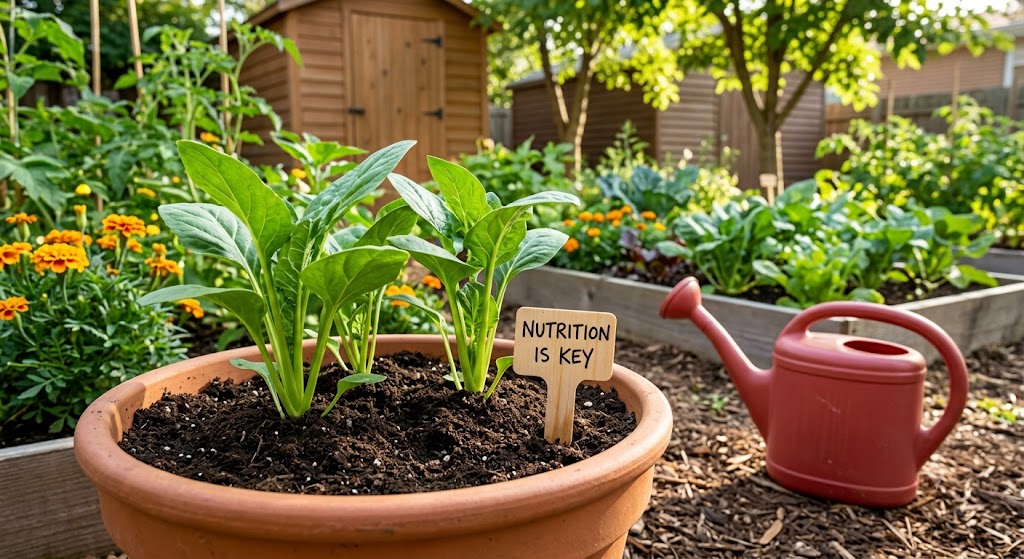
Containers can be useful for herbs, greens, peppers, tomatoes, and other compact crops.
One advantage is accessibility. You can position containers close to the house, making it easier to check them during your daily routine.
Just make sure containers have appropriate drainage and aren’t too small for the plants you’re growing.
Create a Simple 15-Minute Routine
Here’s an easy routine to follow.
Minutes 1–3: Walk and Observe
Look at the overall condition of your plants.
Check leaves, stems, flowers, fruit, and soil.
Minutes 4–7: Water Where Needed
Check the soil before watering and focus on plants that actually need moisture.
Minutes 8–10: Pull Weeds
Remove a handful of small weeds before they have time to establish themselves.
Minutes 11–13: Harvest
Pick vegetables, herbs, or fruit that are ready.
Minutes 14–15: One Small Task
Use the final couple of minutes for one specific job.
You might tie up a plant, remove a damaged leaf, check for pests, refill a container, or add a little mulch.
That’s it.
You don’t have to finish every gardening task every day.
Don’t Try to Fix Everything at Once
One of the biggest mistakes busy gardeners make is waiting until they have a large block of free time.
Instead, break maintenance into tiny tasks.
Today you might remove weeds. Tomorrow you might check for pests. The following day you might prune a plant that needs attention.
Small jobs become much easier when they don’t accumulate.
Make Your Garden Work for You
The easiest garden to maintain is one that was designed with maintenance in mind.
Place frequently harvested plants somewhere accessible. Keep tools where you use them. Group plants with similar watering needs when practical. Use mulch where appropriate, and avoid planting more than you can reasonably care for.
Good organization can save more time than working faster.
What About Days When You Have No Time?
Sometimes even 15 minutes isn’t available.
That’s okay.
If you have only a minute or two, prioritize the things that can prevent immediate problems: check whether plants are severely wilted, look for obvious pest damage, and harvest anything that needs picking.
You can handle less urgent jobs later.
The goal isn’t perfection. It’s consistency.
The Real Secret to a Low-Maintenance Vegetable Garden
The secret isn’t a magic fertilizer, expensive equipment, or a complicated gardening system.
It’s building a routine that prevents problems from piling up.
Fifteen minutes of regular attention can be enough to keep a modest vegetable garden organized and productive, especially when you’ve chosen plants that suit your space and growing conditions.
So instead of waiting for an entire free Saturday to work in the garden, step outside tomorrow and spend just 15 minutes.
Check your plants. Water what needs it. Pull a few weeds. Harvest what’s ready.
Then walk away.
Your future self—and your garden—will thank you.