What if some of your kitchen scraps could become the beginning of your next batch of fresh produce?
Before tossing vegetable ends into the compost or trash, look at what you’re throwing away. Certain vegetables can regrow from leftover stems, bases, bulbs, or root sections with surprisingly little effort.
A sunny windowsill, a small container, clean water, and a little patience can be enough to get started. While regrowing scraps won’t always produce a full replacement for everything you buy at the grocery store, it can be a fun and inexpensive way to grow fresh greens and reduce kitchen waste.
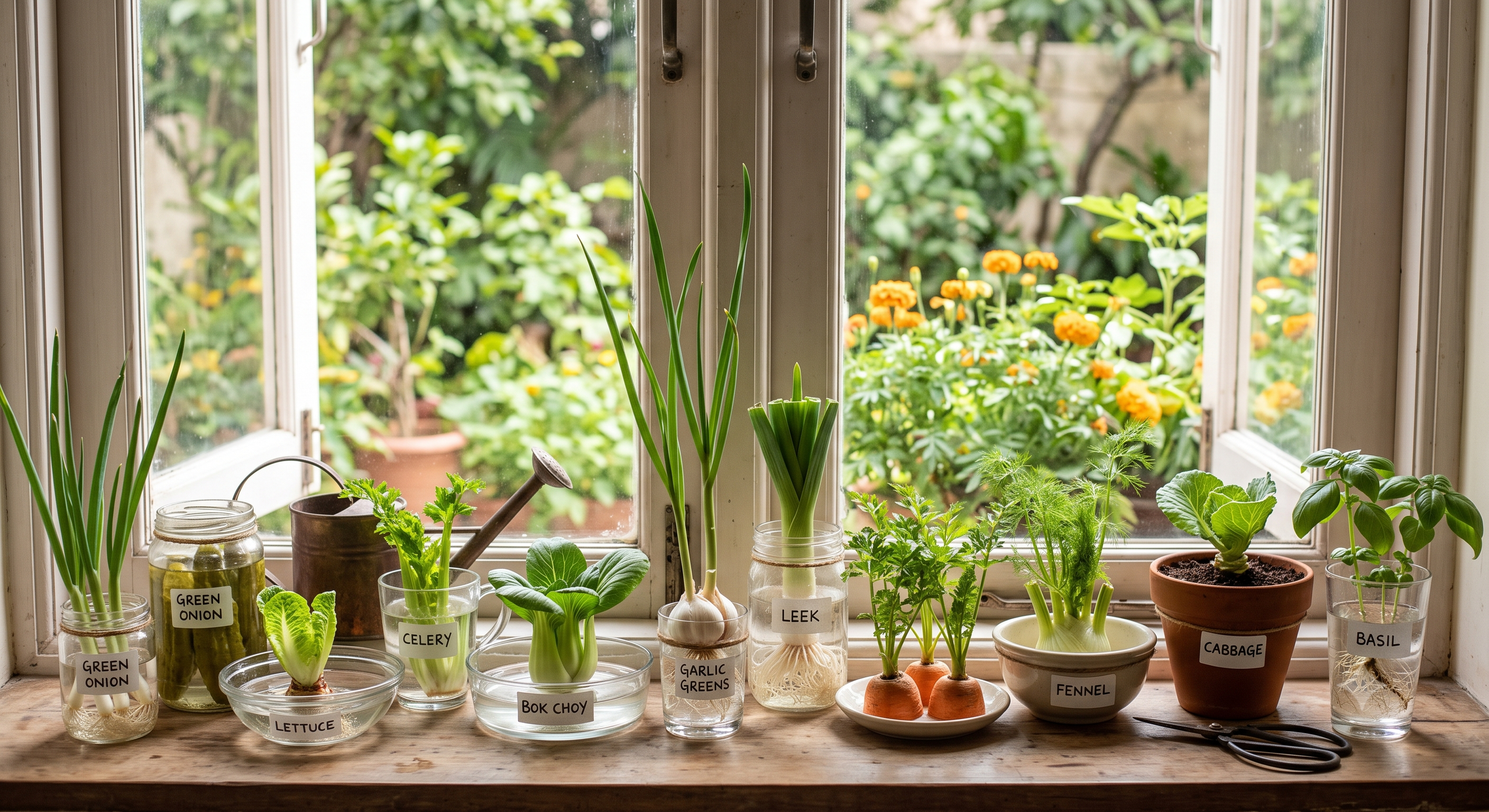
Here are 10 vegetables worth trying.
1. Green Onions
Green onions are among the easiest vegetables to regrow.
Instead of throwing away the white bulb and roots, place the ends upright in a shallow glass containing a small amount of water. Keep the roots submerged while leaving most of the stem above the water.
Put the container near a bright window and replace the water regularly.
New green growth can appear surprisingly quickly. Once the shoots are established, you can trim the greens for cooking while allowing the plant to continue growing.
2. Lettuce
Finished with a head of romaine or another type of lettuce? Save the bottom portion.
Place the lettuce base in a shallow dish with a little water. Position it somewhere with good natural light and refresh the water regularly.
New leaves may begin developing from the center.
For the best results, move the lettuce into potting soil once new growth and roots begin developing. The resulting plant may not produce another grocery-store-sized head, but it can provide additional leaves for salads and sandwiches.
3. Celery
Celery is another kitchen scrap that can produce fresh growth.
Save the bottom section of the celery bunch and place it in a shallow container with water. Keep the base partially submerged and provide plenty of light.
As new leaves emerge from the center, you can eventually transfer the plant to soil.
The new growth can be harvested gradually rather than removing everything at once.
4. Bok Choy
Don’t throw away the thick base of bok choy.
Place the base in a shallow dish containing a small amount of water. Keep it in a bright location and change the water regularly.
Fresh leaves can begin growing from the center.
Once roots develop, planting it in soil can give the plant additional support and access to nutrients.
5. Green Garlic
Garlic can provide more than just flavor for your cooking.
If you have a garlic clove that has started sprouting, you can plant it in soil with the pointed end facing upward. Keep the soil lightly moist and place the container somewhere bright.
The green shoots can be harvested as garlic greens.
If you have enough growing space and the right conditions, allowing the plant to mature can eventually produce a new garlic bulb.
6. Leeks
Leeks have a useful base that doesn’t need to go straight into the trash.
Place the root end in a shallow container with water. Keep the roots submerged and position the container near a sunny window.
New green leaves can emerge from the center.
Once the plant begins developing roots and new growth, transferring it into soil can encourage continued development.
7. Fennel
The bulb and root base of fennel can sometimes produce fresh green growth.
Place the base in a small amount of water and give it plenty of natural light. New shoots may appear from the center.
The regrown foliage can be used as an herb or garnish.
For continued growth, move the plant into soil once roots begin developing.
8. Carrot Tops
You can’t grow a whole new carrot from the leafy top alone, but you can grow fresh carrot greens.
Save the top portion of a carrot and place it cut-side down in a shallow dish with a little water.
Within a short time, new green leaves may begin growing.
Carrot greens can be used in pestos, salads, sauces, or as a garnish. Just remember that the original carrot root will not regenerate from the leafy top.
9. Turnips
Turnip tops can also produce new greens.
Save the upper portion of the turnip and place it in shallow water. Give it plenty of light and replace the water regularly.
New leaves can develop from the center.
Once the plant has established roots, transferring it to soil may help support longer-term growth.
10. Beet Greens
Don’t overlook the leafy tops of beets.
Place the beet top in a shallow container with water, keeping only the bottom portion in contact with the water.
With sufficient light, new leaves can emerge from the center.
The young greens can be harvested and added to salads, soups, or cooked dishes.
Again, the original beet root won’t grow back from the leafy top, but the greens can give your kitchen scraps another useful purpose.
How to Make Your Windowsill Scrap Garden More Successful
Regrowing vegetables is simple, but a few habits can make a major difference.
Give Them Enough Light
A bright windowsill is ideal for many regrowing projects. If the new leaves become pale, weak, or unusually stretched, the plant may not be receiving enough light.
Keep the Water Clean
When you’re starting scraps in water, don’t simply leave the same water sitting there indefinitely.
Refresh it regularly and rinse the container if it becomes cloudy or develops residue.
Don’t Submerge Everything
Most vegetable scraps don’t need to be completely underwater.
The goal is generally to keep the base or roots moist while allowing the upper portion to remain exposed to air. Too much standing water can encourage rot.
Move Established Plants Into Soil
Water can help vegetable scraps produce initial roots and shoots, but it doesn’t provide all the nutrients a growing plant needs.
Once a plant has developed roots and new growth, transferring it into an appropriate potting mix can provide better long-term support.
Which Scraps Are Easiest for Beginners?
If you’re new to regrowing vegetables, start with green onions, lettuce, celery, or bok choy.
They’re relatively simple projects and don’t require much space.
You can experiment with several scraps at the same time and observe which ones perform best in your particular home.
A Small Windowsill Can Make a Difference
Regrowing vegetables isn’t a replacement for a full vegetable garden, and some scraps won’t produce another full-sized vegetable. But that’s not really the point.
A few leftover stems or bases can become a small indoor growing experiment. You’ll get to watch new growth develop, make use of kitchen scraps, and potentially harvest fresh greens along the way.
So next time you’re preparing vegetables for dinner, pause before throwing those ends away.
Your windowsill might have room for them.